Brochure vs Flyer vs Catalog: Which One Does Your Business Need?
Printed marketing materials continue to play a powerful role in branding and promotions, even in this digital-first era. Whether you run a small local business, a real estate company, a restaurant, or a large retail brand, professionally designed print materials can help you attract attention, build trust, and communicate your message more effectively.
But here’s where many businesses get confused. Should you invest in a brochure, a flyer, or a catalog?
Although at first, all three may seem similar because they are used for marketing. However, each serves a completely different purpose. Choosing the wrong one can lead to wasted printing costs, poor customer engagement, and weak marketing results.
In this guide, we’ll break down the difference between brochures, flyers, and catalogs in the simplest way possible, so you can confidently choose the right marketing material for your brand.
Why Printed Marketing Materials Still Matter
Many people believe print marketing has become outdated because of social media and online advertising. In reality, print materials still hold strong value when used correctly.
Here’s why businesses still invest in print marketing:
Creates Better Brand Recall
People are more likely to remember something they can physically hold and browse than something they quickly watch in a digital ad.
Supports Offline Marketing
Flyers, brochures, and catalogs work really well for local promotions, exhibitions, trade shows, meetings, and in-store marketing.
Gives Customers Detailed Information
Unlike short online ads, printed materials allow businesses to explain products, services, pricing, features, and benefits more clearly.
Complements Digital Marketing
Modern businesses often combine printed materials with digital campaigns for stronger overall branding and customer engagement.
Read More – How to Use Brochures Across Sales, Events, and Marketing
What Is a Flyer?
A flyer is a single-page printed marketing material designed for quick promotions and fast communication. Flyers are usually simple, affordable, and easy to distribute. Their main goal is to grab attention quickly and encourage immediate action.
You’ve probably received flyers promoting:
- Restaurant discounts
- Gym memberships
- Real estate launches
- Events and concerts
- Retail sales
- Local business services
Flyers are generally distributed by hand, inserted into newspapers, placed on notice boards, or shared at public events.
Main Purpose of Flyers
The primary purpose of a flyer is promotion.
Flyers are designed to:
- Announce offers
- Promote events
- Create urgency
- Drive quick customer action
- Increase short-term sales
Because flyers are meant for quick reading, they usually contain limited information and focus heavily on eye-catching visuals and bold headlines.
Key Features of a Flyer
Single-Page Design
Most flyers are one-page documents without folds or multiple sections.
Minimal Content
Flyers focus only on essential information to avoid overwhelming readers.
Bold Headlines
Attention-grabbing titles are used to capture interest instantly.
Strong Call-to-Action
Flyers encourage immediate responses such as:
- Call now
- Visit today
- Register today
- Limited-time offer
Cost-Effective Printing
Flyers are one of the most affordable print marketing options available.
When Should Businesses Use Flyers?
Flyers work best when businesses need to visible ot masses fast. For example, a restaurant launching a weekend discount campaign can distribute flyers in the same area to attract immediate customers.
Flyers are ideal for:
- Seasonal sales
- Event promotions
- Restaurant offers
- Real estate announcements
- Store openings
- Local advertising campaigns
Advantages of Flyers
- Flyers are budget-friendly, making them perfect for small businesses and startups.
- They can be easily handed out in crowded areas, inserted into packages, or displayed at stores.
- You can quickly design and print flyers for urgent promotions.
- They work well for limited-five offers and events.
Limitations of Flyers
While flyers are effective, they also have some drawbacks.
- Flyers provide limited space. There’s enough space for detailed explanations or storytelling.
- They have a short lifespan. Most people throw them away after reading them once.
- Compared to brochures or catalogs, flyers may feel less luxurious or professional if they’re not designed properly.
What is a Brochure?
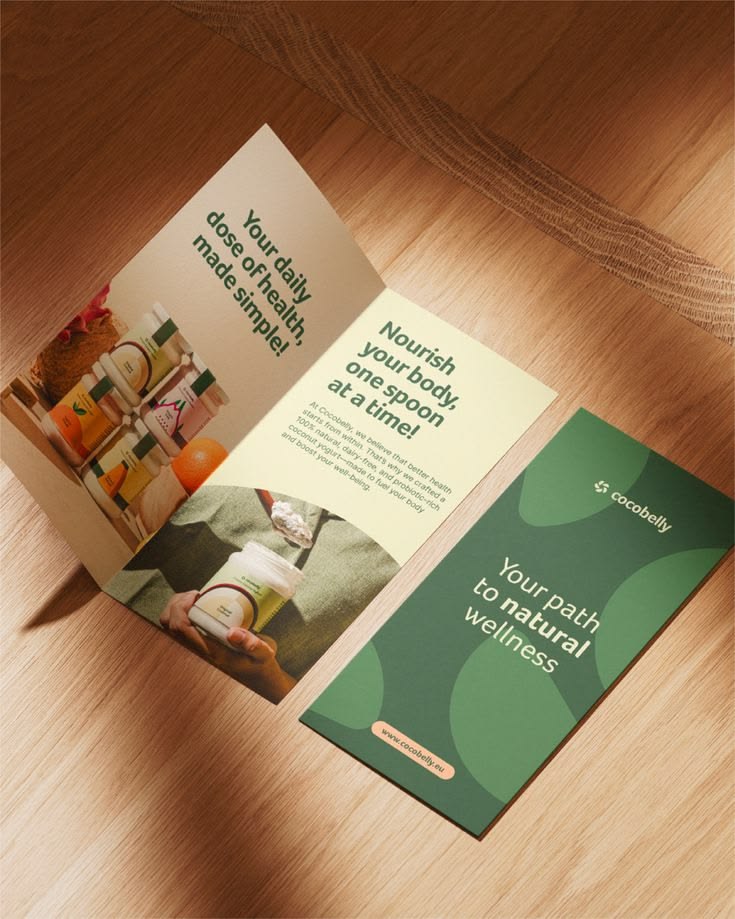
A brochure is a folded marketing document designed to provide more detailed information about a business, service, or product. Unlike flyers, brochures focus more on educating customers and building trust rather than just quick promotions. They are often handed out during meetings, exhibitions, presentations, or customer consultations.
Brochures are commonly used by:
- Real estate companies
- Healthcare clinics
- Educational institutes
- Corporate businesses
- Hotels and resorts
- Travel agencies
Main Purpose of Brochures
Brochures help businesses explain their services or products in a more professional and structured way. It gives businesses enough space to combine visuals, storytelling, and information without confusing and overwhelming readers.
They are designed to:
- Build credibility
- Showcase brand identity
- Explain services in detail
- Educate potential customers
- Support sales presentations
Key Features of a Brochure
Detailed Information
Brochures provide enough space to explain products or services properly.
Professional Design
Brochures are usually designed with strong branding, elegant layouts, and premium visuals.
Balanced Content Structure
Unlike flyers, brochures maintain a balance between text and visuals.
Better Storytelling
Businesses can communicate their brand story, values, and expertise more effectively.
Read More – Brochure Design for Dubai Real Estate Business
When Should Businesses Use Brochures?
Brochures are perfect when businesses need to create a professional impression and educate potential customers. They work best for:
- Corporate presentations
- Real estate projects
- Educational institutions
- Healthcare services
- Luxury brands
- Hospitality businesses
Advantages of Brochures
Brochures instantly improve brand perception. People spend more time reading brochures compared to flyers. Businesses can explain services in detail without overcrowding the layout. Customers often keep brochures for future reference.
Limitations of Brochures
Brochures are more expensive than flyers because of folding, paper quality, and design complexity. A brochure needs well-structured content and thoughtful design to look effective.
What Is a Catalog?
A catalog is a multi-page printed document designed to showcase a complete range of products or services. Unlike a brochure, a catalog focuses heavily on product listings, categories, specifications, and pricing.
Catalogs are commonly used by:
- Furniture brands
- Fashion companies
- Electronics stores
- Wholesale suppliers
- Interior design businesses
- E-commerce brands
Main Purpose of Catalogs
Catalogs help customers browse products in an organized and detailed way. A catalog acts like a printed store.
Their main goals include:
- Displaying product collections
- Encouraging purchases
- Helping customers compare products
- Providing detailed product information
Key Features of a Catalog
Catalogs can range from a few pages to hundreds depending on product volume. Products are organized into categories for easier browsing. Catalogs include detailed product information, specifications, and pricing. Professional product images play a major role in catalog design.
Read More – The Role of a Design Agency in Building Brand Identity
When Should Businesses Use Catalogs?
Catalogs are ideal for businesses with large product collections.
They work best for:
- Fashion collections
- Furniture brands
- Electronics stores
- Wholesale businesses
- E-commerce product showcases
Advantages of Catalogs
- Catalogs help customers easily explore multiple products.
- Well-organized catalogs improve customer browsing and decision-making.
- Businesses can effectively showcase their full product ranges.
- Catalogs help sales representatives present products professionally.
Limitations of Catalogs
- Catalog printing costs are significantly higher than those of flyers or brochures.
- Catalogs require proper planning, photography, layout design, and product organization.
- Businesses may need to reprint catalogs whenever products or prices change.
Brochure vs Flyer vs Catalog: Key Differences
Although all three of these are marketing materials, what they offer is completely different.
Purpose
- Flyers are perfect for quick promotions
- Brochures focus on detailed business information
- Catalogs are ideal for product showcasing
Content Length
- Flyers contain minimal information
- Brochures contain moderate information
- Catalogs contain extensive information
Printing Cost
- Flyers are the most affordable
- Brochures have moderate costs
- Catalogs are the most expensive
Design Style
- Flyers use bold and urgent designs
- Brochures focus on professional branding
- Catalogs prioritize product organization
Lifespan
- Flyers are temporary
- Brochures are often retained longer
- Catalogs are repeatedly used for browsing
How to Choose the Right One for Your Business
Choosing the right marketing material depends on your business goals, target audience, and budget.
Choose a Flyer If:
- You need quick promotions
- You have a limited budget
- Your campaign is short-term
- You want mass distribution
Choose a Brochure If:
- You want to build trust
- You need to explain your services clearly
- You want a premium brand image
- You meet clients personally
Choose a Catalog If:
- You sell multiple products
- Customers need product comparisons
- You want to showcase collections
- Your business is product-focused
Read More – What Makes a Corporate Brochure Look Professional
Final Thoughts
Brochures, flyers, and catalogs are all print marketing materials, but each of them serves a distinct purpose.
A flyer is best for quick promotions and immediate visibility.
A brochure is ideal for professional branding and detailed communication.
A catalog is perfect for showcasing multiple products in an organized way.
The right choice depends entirely on your business goals, audience, budget, and the type of information you want to share. When designed professionally by reputable design agency, all three marketing materials can be powerful tools for customer engagement, brand awareness, and sales growth.