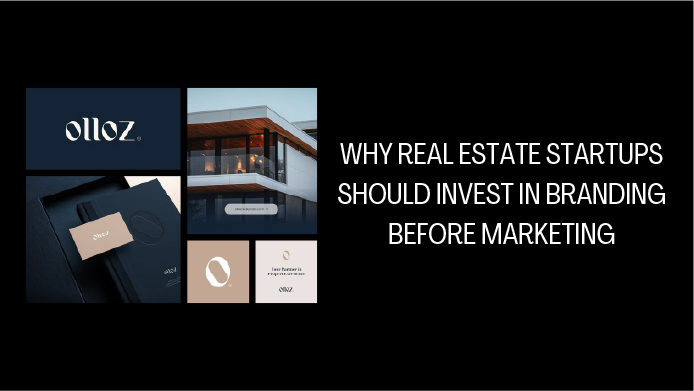
Why Real Estate Startups Should Invest in Branding Before Marketing
Launching a real estate startup feels exciting, but it also means facing tough competition in the industry. Many startups believe that running Google Ads, posting on social media, or investing in SEO is the fastest way to grow. While marketing is important, it shouldn’t be your first investment.
The truth is simple: branding should come before marketing.
While marketing helps people know about your business, your branding gives them a reason to trust you. In real estate, customers want to work with businesses that look reliable, experienced, and trustworthy. Strong branding helps your business reflect a clear identity, professional appearance, and consistent message.
In this guide, you’ll learn the difference between branding and marketing, why branding should always come first, and how investing in branding can make every future marketing effort more successful.
Branding vs. Marketing: What’s the Difference?
Many people think branding and marketing are the same, but they actually serve different purposes. Understanding the difference is the first step toward building a successful real estate business.
Branding: Branding determines how people see, remember, and feel about your business. It’s the personality of your company and the promise you make to customers.
Marketing: Marketing is how you promote your business and attract customers.
Marketing brings visitors to your website or social media pages. However, whether those visitors become customers often depends on your branding.
Branding Builds Trust, Marketing Builds Visibility
A simple way to understand the difference is this:
| Branding | Marketing |
| Builds trust | Creates awareness |
| Shapes customer perception | Drives traffic and leads |
| Creates emotional connections | Promotes products and services |
| Long-term investment | Campaign-based |
| Makes your business memorable | Gets your business noticed |
| Defines your brand identity and values | Communicates your offers to the target audience |
Why Branding Should Come Before Marketing
Imagine you spend thousands of dollars on online ads. People click your advertisement, visit your website, and then leave within seconds. Why? Usually, it’s because your business does not seem trustworthy.
Customers ask themselves questions like:
- Is this company professional?
- Can I trust them with such a big investment?
- Do they understand my needs?
- Are they different from other agencies?
If your branding doesn’t answer these questions, your marketing budget works much harder than it should.
Branding gives people a reason to choose your business, while marketing gives them a chance to discover. Before you advertise, your business should have:
- A clear identity
- A consistent visual style
- A compelling value proposition
- Professional messaging
- A memorable customer experience
8 Reasons Real Estate Startups Should Invest in Branding Before Marketing
Branding Builds Instant Trust
Real estate works on trust. Since it involves important financial decisions, customers naturally prefer businesses that appear credible and professional.
A polished logo, modern website, consistent visuals, and clear messaging create strong first impressions. Professional branding tells customers:
- We’re established.
- We’re reliable.
- We take our work seriously.
- We care about quality.
Strong Branding Improves Marketing
Many startups think that increasing their advertising budget will get them more leads. Unfortunately, that’s a rare case. Marketing performs much better when people already know and trust your brand.
Strong branding can improve:
- Click-through rates on ads
- Website engagement
- Lead conversion rates
- Social media interactions
- Customer inquiries
- Return on advertising spend
When customers recognize your business and feel confident in your brand, they’re much more likely to take the next step.
Stand Out From Competitors
Most real estate agencies offer similar services like buying property, selling property, rentals, property management, and investment advice. If everyone offers similar services, why would someone choose your startup?
The answer lies in branding. Strong branding highlights your unique strengths.
Maybe your startup specializes in:
- First-time homebuyers
- Luxury homes
- Commercial properties
- Sustainable developments
- Family-friendly communities
- Smart property investments
Your branding communicates this clearly and consistently, making it easier for customers to remember your business.
4. Customers Remember Brands, Not Ads
People see thousands of advertisements every day and forget most of them within minutes. What people remember are brands that create stad out. Think about some of the biggest companies in the world. People don’t remember individual advertisements—they remember the brand behind them.
The same principle applies to real estate startups.
When customers repeatedly see:
- The same logo
- The same colors
- Consistent messaging
- Professional property presentations
- Helpful content
Your business becomes familiar and trustworthy. Over time, customers may recommend your business simply because they remember your brand, even if they aren’t ready to buy immediately.
5. Branding Builds Emotional Connections With Buyers
Real estate decisions are rarely based only on numbers. Successful branding connects with customers’ emotions.
For example, instead of only saying:
“We sell apartments.”
A stronger brand message might say: “Helping families find a place they’ll proudly call home.”
That small difference creates an emotional connection. When customers connect emotionally, they become more confident in choosing your business.
6. Consistent Branding Builds Recognition
One of the biggest mistakes startups make is looking different everywhere. Their website has one style. Their Instagram uses different colors. Their brochures look unrelated. Their presentations follow another design. This inconsistency confuses customers.
Strong branding creates a consistent experience across every customer touchpoint, including:
- Website
- Social media
- Property brochures
- Business cards
- Email signatures
- Presentation decks
- Signboards
- Digital advertisements
Consistency makes your business look organized, reliable, and professional.
7. Branding Lowers Marketing Costs
Many startups believe branding is an unnecessary expense. In reality, it saves money in the long run.
A strong brand naturally generates:
- More referrals
- Better word-of-mouth marketing
- Higher customer loyalty
- More repeat business
- Better organic search visibility
- Higher conversion rates
When people already trust your brand, you don’t have to spend as much convincing them. Branding is not just a creative investment—it’s a business investment.
8. Branding Makes Scaling Easier
Every startup that starts from one neighborhood wants to grow into multiple cities or launch new property developments in the future. A well-established brand makes this growth much easier.
Customers who already trust your business are more likely to explore your new services, projects, or locations.
Strong branding also helps:
- Attract investors
- Recruit talented employees
- Launch premium developments
- Introduce new services
- Enter new markets confidently
What Happens When Real Estate Startups Skip Branding?
As soon as startups launch, they create social media accounts, run paid ads, and publish property listings without first building a strong brand. While these efforts may generate some attention, without strong branding, marketing becomes much harder and more expensive.
Let’s look at some common problems.
Inconsistent Visual Identity: If each platform has different colors, fonts, messaging, or design styles, your business appears unorganized.
A consistent brand identity makes your business look professional and memorable.
Weak Customer Trust: If your branding looks outdated or incomplete, potential buyers may question your credibility even if your services are excellent.
Professional branding reassures customers that your business is established, reliable, and serious about delivering quality.
Poor Marketing Return on Investment (ROI): Running ads without a strong brand often leads to low conversions.
A recognizable brand increases confidence, making every marketing campaign more effective.
Low Brand Recall: Customers may see dozens of real estate advertisements every week. Without a memorable identity, they’ll quickly forget your business.
A distinctive logo, consistent visuals, and a clear brand message help people remember you.
Confusing Messaging: Some startups try to target everyone. Without clear positioning, customers become confused about what your business actually specializes in.
Strong branding keeps your message focused and consistent.
Essential Elements Every Real Estate Startup Brand Needs
To build a successful brand, every element should work together to create a consistent customer experience.
Brand Strategy
Your brand strategy defines who you are, who you serve, and what makes your business different. It provides direction for every marketing decision you’ll make in the future.
Target Audience
Not every property buyer has the same needs. The better you understand your audience, the stronger your brand becomes.
Identify your ideal customers by considering:
- First-time homebuyers
- Luxury property investors
- Commercial buyers
- Families
- International investors
- Young professionals
Brand Positioning
Positioning answers one important question:
Why should customers choose your business instead of another?
Your positioning should clearly communicate your unique strengths and expertise.
Unique Value Proposition (UVP)
Your UVP is the promise you make to customers.
Examples include:
- Personalized property guidance
- Luxury real estate expertise
- Investment-focused advice
- End-to-end buying support
- Transparent communication
A strong UVP makes your business more memorable.
Professional Visual Identity
Your visual identity includes:
- Logo
- Brand colors
- Typography
- Icons
- Photography style
- Graphic elements
Every design choice should reflect your brand personality.
Brand Voice
The way your business communicates is just as important as how it looks.
Decide whether your tone will be:
- Professional
- Friendly
- Premium
- Modern
- Informative
- Approachable
Then use that same voice across every platform.
Website Design
Your website is often the first interaction customers have with your business.
A professionally designed website should:
- Load quickly
- Be mobile-friendly
- Showcase your brand clearly
- Highlight your services
- Make contacting you easy
Marketing Materials
Maintain consistent branding across:
- Property brochures
- Sales presentations
- Business cards
- Email signatures
- Social media posts
- Digital advertisements
Brand Guidelines
As your business grows, consistency becomes even more important. Brand guidelines help ensure every employee, designer, and marketer follows the same visual and communication standards.
Branding Checklist Before You Start Marketing
Before investing heavily in marketing, make sure you’ve completed these essentials:
- Defined your target audience
- Researched competitors
- Established your brand mission and values
- Created a unique value proposition
- Designed a professional logo
- Selected brand colors and typography
- Developed consistent messaging
- Built a user-friendly website
- Created branded social media profiles
- Prepared professional brochures and presentations
- Organized high-quality property photography
- Documented your brand guidelines
Once these foundations are in place, your marketing efforts will have a much greater chance of success.
How Strong Branding Improves Every Marketing Channel
Branding doesn’t replace marketing; it simply makes it work better. Here’s how it helps across different channels.
Branding + SEO
Google prefers websites people trust and enjoy using.
A strong brand usually leads to:
- Better engagement
- Longer time on site
- Lower bounce rates
- Higher credibility
All of this helps your SEO over time.
Branding + Google Ads
People click what feels familiar and professional.
A strong brand can improve:
- Click-through rates
- Conversions
- Quality Score
- Ad performance
Branding + Social Media
Consistent branding makes your content easy to recognize. When people instantly know it’s you, they engage more and start trusting your business faster.
Branding + Content Marketing
Blogs, videos, and guides feel more valuable when they all sound and look consistent. Over time, people start associating your brand with useful information.
Branding + Email Marketing
Branded emails feel more genuine and trustworthy. That simple recognition increases opens, reads, and responses.
Branding + Property Brochures
A good brochure shows professionalism. It helps you leave a strong impression on serious buyers and investors.
Branding + Video Marketing
Videos become more memorable when your brand is consistent. Logos, colours, and tone all help people remember you long after they’ve watched.
Final Thoughts
Many real estate startups think marketing is the fastest way to grow. But without branding, even the best marketing campaigns struggle to deliver lasting results. A strong brand gives your business a clear identity, builds trust with potential buyers, helps you stand out from competitors, and makes every marketing effort more effective.
When you invest in branding first, you’re not just creating a logo or choosing brand colors. You’re building the foundation for sustainable growth, stronger customer relationships, and better marketing performance for years to come.
Frequently Asked Questions
Is branding more important than marketing for a real estate startup?
Both are important, but branding should come first. Marketing attracts attention, while branding builds trust and encourages customers to choose your business.
When should a startup invest in branding?
Ideally, before launching any major marketing campaigns. Building your brand early creates a stronger foundation for long-term growth.
Can marketing succeed without branding?
It may generate short-term traffic, but without strong branding, converting visitors into loyal customers becomes much more difficult.
What is included in real estate branding?
Branding typically includes brand strategy, logo design, visual identity, messaging, website design, brand voice, social media branding, and brand guidelines.
How does branding improve lead generation?
A professional and consistent brand increases customer confidence, helping more visitors become inquiries and qualified leads.
Can branding help a startup compete with established agencies?
Yes. While startups may not have years of experience, strong branding can help them appear credible, professional, and trustworthy from the beginning.