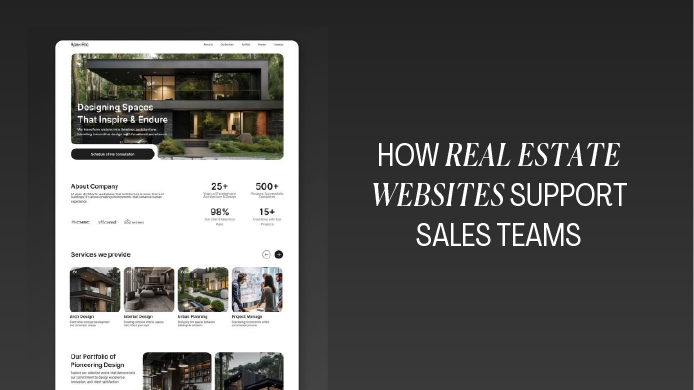
How Real Estate Websites Support Sales Teams
In real estate, a website is one of the most important tools a sales team can have. A well-designed real estate website helps bring in leads, answer buyer questions, build trust, and move people closer to making a decision.
For design agencies, this is an important topic because the best real estate websites are built to support sales. When a website is planned properly, it becomes a powerful part of the sales process. It works like a digital assistant, helping the sales team save time, stay organized, and focus on the right buyers.
In this article, we will explain how real estate websites support sales teams, what features matter most, and why design plays such a big role in real estate marketing.
Why Real Estate Websites Matter So Much
Most property buyers today prefer to start their search online. They browse listings, compare projects, check locations, and read about amenities. This means the website often creates the first impression.
If the website is clear, fast, and helpful, the chances of the buyer trusting the brand and contacting the sales team increase. If the website is confusing or outdated, the buyer may leave and look somewhere else.
This is why real estate websites are not just digital brochures. They are sales tools. They help guide visitors from interest to inquiry.
How Real Estate Websites Support Sales Teams
1. They Bring in Qualified Leads
Generating leads is one of the biggest helps that a website provides to the sales team. A lead is someone who shows interest in a property and may want more information.
A good website gives visitors several easy ways to connect, such as:
- enquiry forms
- callback requests
- brochure downloads
- WhatsApp chat buttons
- schedule-a-visit forms
- contact buttons on every project page
These tools help the sales team receive contact details from people who are already interested. That means the team can spend less time chasing cold leads and more time speaking to serious buyers.
2. They Save the Sales Team Time
Sales teams often get asked the same questions again and again.
For example:
- What is the price?
- Where is the project located?
- What are the amenities?
- Is the property ready or under construction?
- What payment plan is available?
A well-built website answers many of these questions without even involving the sales team. Project pages can include useful details, floor plans, location maps, photos, videos, and FAQs. This saves a lot of time. Instead of repeating the same information, sales teams can focus on follow-up calls, site visits, and closing deals.
3. They Build Trust
Buying property is a big decision. People do not want to deal with a business they do not trust. A professional website helps create that trust.
A strong real estate website should show:
- high-quality visuals
- clear project information
- developer details
- testimonials
- awards or achievements
- contact information
- professional branding
When a buyer sees a polished and trustworthy website, they feel more confident about reaching out. This also helps the sales team because leads usually respond better when they already trust the brand.
4. They Help Present Properties Better
A sales team can explain a property, but a website can show it in a stronger way. Good visuals make a huge difference in real estate marketing.
A website can display:
- property photos
- interior and exterior renders
- virtual tours
- video walkthroughs
- drone shots
- lifestyle images
- floor plans
- location highlights
These elements help buyers imagine themselves in the space. They also help the sales team present the property more clearly and professionally.
For example, instead of trying to describe a view, a website can show it. Instead of explaining the layout in words, it can display a floor plan. This makes the sales process smoother and more effective.
5. They Improve Lead Quality
Not every visitor is the right buyer. Some may just be browsing. Others may be looking for a different location, budget, or property type.
A smart website helps filter these visitors. It can guide people to the right project pages based on:
- location
- price range
- property type
- number of bedrooms
- ready or off-plan status
- investment or end-use purpose
This means the sales team receives better-quality leads. When the website gives the right information, people who contact the team are more likely to be a good fit.
6. They Support Faster Follow-Up
Speed matters in sales. If someone fills out a form or asks for a brochure, the sales team should respond quickly.
A good real estate website can support this with:
- instant lead notifications
- CRM integration
- autoresponder emails
- WhatsApp messaging
- booked call options
These features help the team respond faster and stay organized. A quick reply often improves the chance of making a sale.
7. They Work With Marketing Campaigns
A real estate website is not just useful for organic traffic. It also supports ads, email marketing, social media, and offline promotion.
For example:
- a social media ad can send users to a landing page
- an email campaign can link to a new project page
- a Google search result can bring in a buyer looking for a specific area
- a brochure QR code can lead to the website
This makes the website the main hub for all marketing activity. The sales team benefits because every channel sends traffic to one place that is designed to convert.
Website Features That Help Sales Teams Most
To make a website helpful for sales teams, the design has to be planned with the sales process in mind. Here are the most useful features a real estate website should have.
Clear Navigation
Visitors should be able to find what they need quickly. The menu should be simple and easy to scan. Property categories, locations, services, and contact options should be easy to access.
Strong Property Pages
Every project or property should have its own page with full details. A good property page should include:
- project name
- location
- key features
- amenities
- price or starting price
- floor plans
- gallery
- brochure download
- enquiry form
This gives the sales team a complete page to send to potential buyers.
Easy Search and Filtering
If a website has many properties, search filters are very helpful. Buyers should be able to search by budget, location, type, or bedrooms. This makes the experience smoother and helps them find the right option faster.
Strong Calls-to-Action
A call to action tells the visitor what to do next.
Good examples include:
- Book a Site Visit
- Request a Brochure
- Talk to an Agent
- Check Availability
- Get a Call Back
These buttons should be easy to see and placed in the right spots. They guide people toward inquiry and help the sales team get more responses.
Mobile-Friendly Design
Many people browse property websites on their phones. If the site does not work well on mobile, the business can lose leads.
A mobile-friendly website should load quickly, look clean on small screens, and make it easy to tap buttons and fill out forms. This is important because the sales team may lose serious buyers if the mobile experience is poor.
Fast Loading Speed
A slow website can hurt both SEO and sales. People leave slow pages quickly, especially on mobile.
Fast loading speed helps:
- improve user experience
- reduce bounce rate
- support Google rankings
- increase form submissions
SEO-Friendly Content
Real estate websites should be built with search engines in mind. This means using clear headings, helpful page content, location pages, and useful FAQs.
Good SEO helps the website appear when people search for terms like:
- apartments for sale in a specific city
- luxury villas near a location
- off-plan property in a region
- best real estate project in an area
This brings in traffic from people who are already searching for property. That makes the sales team’s job easier.
Why Design Matters in Real Estate Sales
Some people think website design is all about visuals, but in reality, design affects how people think, feel, and act.
A clean and well-organized design helps visitors:
- trust the brand
- understand the offer
- find information quickly
- take action with confidence
A messy website can make even an excellent property look less valuable. On the other hand, a strong design can make the business look more premium and reliable.
For design agencies, this means the goal should never be just to make the website pretty. The real goal is to support sales.
A Real Estate Website Should Be a Sales Tool
A good property website supports the sales team at every step. It attracts the right people, answers their questions, builds trust, and helps them take action. When you design websites with sales in mind, you do more than create a digital presence. You help the business grow.
That is what makes a real estate website truly effective. It should not only look professional. It should work hard for the sales team.
Common Website Problems That Hurt Sales Teams
Many real estate websites fail to support sales because they have simple but serious problems. Some of the most common issues are:
- slow-loading pages
- confusing menus
- weak mobile design
- no lead forms
- poor-quality images
- too much text
- missing project details
- no clear next step
- no CRM connection
- no follow-up system
These problems make it harder for the sales team to get leads and harder for buyers to trust the business.
Tips for Design Agencies to Build a Better Real Estate Website
Design agencies play a key role in making real estate websites useful for sales teams. A good agency should think beyond design and focus on business goals.
Start With the Sales Goal
Before building the website, understand what the client really wants.
Is it:
- more inquiries?
- brochure downloads?
- site visit bookings?
- better leads?
- more trust?
Build the whole website around these goals. It keeps everything focused and effective.
Understand the Buyer Journey
Real estate buyers don’t decide quickly. First, they discover. Then they compare. After that, they ask questions and finally reach out. A good website should support all these stages with the right content at the right time.
Work Closely With the Sales Team
Sales teams know what real buyers think and ask.
Ask them simple things like:
- What do buyers ask most?
- What helps close a deal?
- Where do leads usually drop off?
This helps you design a website that actually works in real sales situations.
Use Analytics to Improve Results
A website is never “done.” It should be improved over time.
Track things like:
- form submissions
- button clicks
- page views
- time on site
- bounce rate
- brochure downloads
This shows what’s working and what’s not. Small changes based on data can improve leads a lot.
Content That Helps Sales Teams Close More Deals
A real estate website should include content that answers buyer questions and makes decision-making easier. Useful content includes:
- project highlights
- nearby landmarks
- payment plans
- developer profile
- amenity details
- location benefits
- floor plans
- FAQs
- testimonials
- investment benefits
- possession timeline
This content helps buyers feel informed. It also helps the sales team because they do not need to explain everything from scratch.
Final Thoughts
Real estate websites are a major part of the sales process today. They do much more than show listings. They help sales teams get better leads, save time, answer questions, and close more deals. For design agencies, this means every real estate website should be built with purpose. It should be easy to use, visually strong, and focused on conversion. When design and sales work together, the website becomes a powerful business asset.
If a real estate brand wants better results, a sales-focused website is one of the smartest investments it can make.
FAQs
How do real estate websites help sales teams?
They help sales teams by bringing in leads, answering common buyer questions, building trust, and making it easier for visitors to contact the team.
What features should a real estate website have?
A strong real estate website should have clear navigation, property pages, enquiry forms, call-to-action buttons, mobile-friendly design, fast speed, and useful content.
Why is website design important in real estate?
Design affects trust, clarity, and user experience. A well-designed website makes the brand look professional and helps visitors take action.
Can a real estate website improve lead quality?
Yes. It can filter visitors through search tools, detailed property pages, and helpful content so the sales team receives more serious leads.
How can design agencies improve real estate websites?
They can focus on the buyer journey, sales goals, mobile design, SEO, lead generation features, and analytics to build websites that truly support business growth.