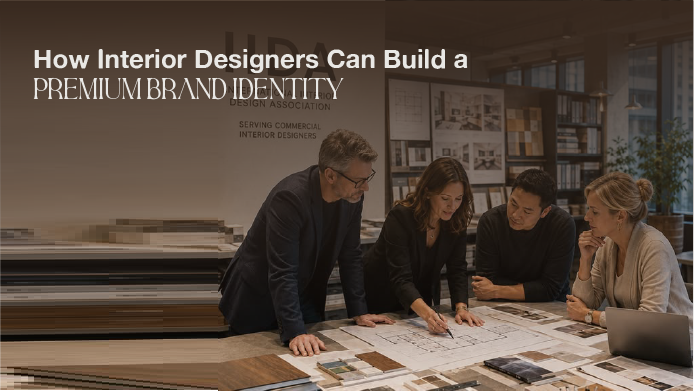
How Interior Designers Can Build a Premium Brand Identity
A beautifully designed place can show what an interior designer is capable of, but it does not automatically make it a premium brand. Even if the work is high quality, the website, social media, project presentation, or brand messaging may not reflect the same level of quality. For interior designers, this matters because clients often look at the brand before they see the finished space.
At The Marketing Socials, we see branding as more than creating a logo or choosing a colour palette. A premium interior design brand needs clear positioning, consistent visuals, confident messaging, and a digital experience that reflects the quality of the work.
So, how can interior designers build a premium brand identity? It starts with aligning what the studio delivers and how it presents itself.
1. Start With Clear Brand Positioning
Your positioning answers a simple question: Why should a client choose your studio over another?
Start by identifying:
- Your ideal client
- The type of projects you specialise in
- Your preferred location or market
- Your design style
- The level of service you provide
- The problems you solve
- What makes your approach different
A clearer position could show that you specialise in contemporary residential interiors, luxury hospitality spaces or commercial environments.
The more clearly you define your position, the easier it becomes to create the right visual identity, content and marketing strategy.
Create a Visual Identity That Reflects Your Design Style
Once your positioning is clear, build a visual identity around it.
This includes your:
- Logo
- Colour palette
- Typography
- Photography style
- Graphic elements
- Presentation layouts
- Social media templates
The important point is that these elements should work together.
Choose colours with purpose
No single colour makes a brand look premium. Neutral tones may work well for an understated design studio, while deeper colours may suit a more dramatic brand.
Choose colours based on the personality you want to communicate rather than copying another luxury brand.
Pay attention to typography
Typography also affects how your brand feels. Choose fonts that match your design style. A modern studio may use clean, simple fonts, while a traditional studio may choose fonts with more character. Whatever you choose, keep the text clear, easy to read, and consistent across your brand.
Think beyond the logo
A premium brand identity is a complete system. Your logo is only one part of it. Use the same visual language across your website, social media, proposals, brochures, and presentations.
Turn Your Portfolio Into Proof of Expertise
Your portfolio should help potential clients understand what you can do, how you think, and what type of projects you are best suited for.
Show the work you want to attract
If you want more luxury villa projects, those projects should be presented strongly in your portfolio.
Tell the story behind each project. Instead of only writing “Modern villa interior in Dubai,” explain the thinking behind the project.
You could include:
- The client’s requirements
- The design challenge
- The concept
- Material and colour choices
- Functional considerations
- Key design decisions
- The final result
This changes the portfolio from a gallery into evidence of expertise.
Invest in professional photography
Photography is important for interior design branding because it captures the work clients are actually buying.
Use a combination of:
- Wide room photographs
- Detail shots
- Material and texture images
- Functional spaces
- Architectural features
- Lifestyle-focused images
Consistent lighting, composition, and editing also help create a recognisable visual style.
Read More – How to Build a Brand Identity for a New Business in Dubai
Build a Website That Matches the Quality of Your Work
Your website should feel like an extension of your design studio. Start with a clear homepage. Your project pages should also explain the project, the challenge, the approach, and the outcome.
Use your website to build trust
Useful trust signals can include:
- Client testimonials
- Case studies
- Project experience
- Team information
- Relevant credentials
- A clear design process
- High-quality project images
Make the enquiry process simple. A visitor shouldn’t have to search through several pages to find out how to contact you.
Use Social Media to Build Brand Authority
Social media can be one of the strongest branding channels for interior designers, particularly because the industry is highly visual. Use it to show both what you create and how you think.
Useful content pillars include:
- Completed projects: Show finished spaces and explain what makes them successful.
- Behind the scenes: Share site visits, material selection, sketches, moodboards, and project development.
- Design expertise: Explain why you selected a particular material, lighting approach, layout, or colour combination.
- Educational content: Answer questions that potential clients commonly ask.
- Client and project stories: Explain a problem and how your studio solved it.
- Your design perspective: Share opinions about materials, trends, functionality, and design decisions.
The strongest content gives the audience a reason to understand and trust the designer behind it.
Develop a Brand Voice That Sounds Like an Expert
Visual quality can lose its impact if the brand’s written content feels basic.
Avoid filling your website and social posts with words such as “stunning,” “luxurious,” “beautiful”, and “dream space” without explaining anything meaningful. Instead, communicate how you approach design.
Your tone should be:
- Clear
- Confident
- Knowledgeable
- Specific
- Human
You do not need complicated design terminology to sound professional.
Keep Every Brand Touchpoint Consistent
Imagine a potential client finds your Instagram and sees a sophisticated visual identity. They then visit your website and find a completely different style. The experience feels disconnected.
Your brand should remain consistent across:
- Website
- Brochures
- Company profiles
- Proposals
- Pitch decks
- Business cards
- Email signatures
- Photography
- Client presentations
Consistency does not mean making everything identical. It means maintaining the same underlying visual and verbal identity.
Use Content Marketing to Demonstrate Your Expertise
Instead of publishing only generic design inspiration, answer real questions that clients have.
For example:
- How do interior designers choose materials?
- How can lighting change the feel of a room?
- How do you balance aesthetics and functionality?
- What should homeowners prepare before hiring an interior designer?
- What are common interior design mistakes?
- How can a luxury interior remain timeless?
- How should clients plan an interior design project?
This type of content has two benefits. First, it can help your website appear for relevant searches. Second, it allows potential clients to see how your team thinks and solves problems.
For SEO, focus each article on one clear search intent. Use descriptive headings, answer questions directly, link related pages naturally, and avoid repeating the same keyword unnaturally.
Make the Client Experience Part of Your Brand
A premium brand cannot stop at the website. The actual client experience should support the promise your branding makes.
Consider every stage:
- First enquiry
- Consultation
- Proposal
- Presentation
- Communication
- Project updates
- Documentation
- Timelines
- Handover
- Follow-up
If your brand promises a highly professional experience but communication is slow, or presentations are unorganised, the gap becomes obvious. Premium branding is not only about appearance. It is also about how people experience the business.
Common Branding Mistakes Interior Designers Should Avoid
Even strong design studios can weaken their brand through small mistakes.
- Trying too hard to look luxurious: Using luxury words, gold colours, or elaborate graphics does not automatically create a premium perception.
- Copying competitors: Your branding should communicate your own design philosophy rather than looking like another studio.
- Showing everything: A large portfolio is not necessarily a strong portfolio. Select projects strategically.
- Using inconsistent photography: Different editing styles and image quality can make the brand feel fragmented.
- Treating social media as a photo gallery: Your audience should also see your expertise, process, and perspective.
- Using generic messaging: If your website could describe ten other interior design companies, your positioning needs more work.
- Ignoring small brand details: Typography, layouts, presentation documents, and email communication all contribute to the overall impression.
How to Build a Premium Interior Design Brand Step by Step
If you are starting from scratch, follow this sequence:
Step 1: Define your ideal client.
Step 2: Clarify your positioning and design philosophy.
Step 3: Identify what makes your studio different.
Step 4: Develop a visual identity that supports that position.
Step 5: Curate a portfolio around the projects you want to attract.
Step 6: Improve your project photography and presentation.
Step 7: Build a website that communicates your expertise clearly.
Step 8: Create a social media content system.
Step 9: Publish useful, expert-led content.
Step 10: Make your proposals and client experience consistent with the brand.
Then review the entire customer journey regularly. Your brand should evolve as your studio, projects, and ideal clients evolve.
Read More – How to Choose a Social Media Design Agency in Dubai
What Makes a Premium Interior Design Brand Stand Out in Dubai?
Dubai’s interior design space includes residential, hospitality, commercial, and luxury projects, making clear positioning especially important for studios competing for attention.
For Dubai-based designers, strong branding should communicate more than visual taste. It should make the studio’s expertise, project experience and approach easy to understand. Professional photography, a polished website, a consistent social presence, and clear project storytelling can help a studio present its work more effectively.
Most importantly, avoid trying to look like every other luxury business in Dubai. A unique point of view is more important than simply adding a luxury aesthetic.
The 6 Layers of a Premium Interior Design Brand
A useful way to evaluate your brand is to look at six connected layers:
| Brand layer | What it communicates |
| Positioning | Who you serve and what makes you different |
| Visual identity | How your brand looks and feels |
| Portfolio | What you can actually deliver |
| Messaging | How you communicate your expertise |
| Digital experience | How clients experience your brand online |
| Client experience | Whether the real experience matches the promise |
If one layer feels weaker than the others, it can affect the overall perception of the brand.
Read More – Personal Branding Tips for Interior Designers in Dubai
Final Thoughts
A premium interior design brand is not created by making everything look expensive. It is created when the brand consistently shows the quality, expertise, and point of view behind the work.
From positioning and visual identity to project photography, website design, content and client experience, every touchpoint forms perception.
At The Marketing Socials, we believe the strongest interior design brands do not simply showcase beautiful spaces. They show why those spaces are valuable, how they were created, and what makes the studio behind them different.
If your work already delivers a high level of quality but your branding does not communicate it, it may be time to look at the complete brand experience, not just the logo.
FAQs
What makes an interior design brand look premium?
A premium interior design brand combines clear positioning, strong visual identity, professional photography, expert messaging, consistent presentation, and a polished client experience.
Why is branding important for interior designers?
Branding helps interior designers communicate their value, differentiate themselves from competitors, and attract clients who are a better fit for their services.
How can an interior designer differentiate their brand?
Start by defining a specific audience, design philosophy, project type, or approach. Then make that difference visible through your portfolio, messaging, and content.
Does a premium interior design brand need a luxury logo?
No. A logo can support the brand, but premium perception comes from the complete experience rather than one visual element.
How can interior designers use social media for branding?
Use social media to show completed projects, design processes, expertise, client stories, and professional opinions rather than posting finished-project images alone.
How important is photography for an interior design brand?
Very important. For a visual business, project photography influences how clients perceive the quality, detail, and professionalism of the studio’s work.